
RV-6
This analysis is based on considerable flight experience by Brian Parris, flying his RV-6 equipped with Stolspeed Vortex Generators.
“I’m giving a presentation to Van’s Aircraft factory personnel at Independence, Oregon for the Van’s Homecoming event.
I’ve been working with the developer in Australia of the Stolspeed VG system for several years, and this is the culmination of that work.”
Brian submitted this document to the EAA to explore interest in publishing an article or series on the effect of vortex generators in reducing stall/spin accidents in experimental aircraft.
The Stolspeed VG installation on the RV-6 improves:
-
Low-speed controllability
-
Crosswind and turbulence stability
-
Stall resistance
-
Overall flight safety
Brian believes that if the RV community widely adopts VGs, stall/spin accident rates could be significantly reduced.
“The RV-6 is a fine aircraft, but with proper pilot technique and Stolspeed VGs, it becomes even safer and more stable, especially in demanding conditions.”
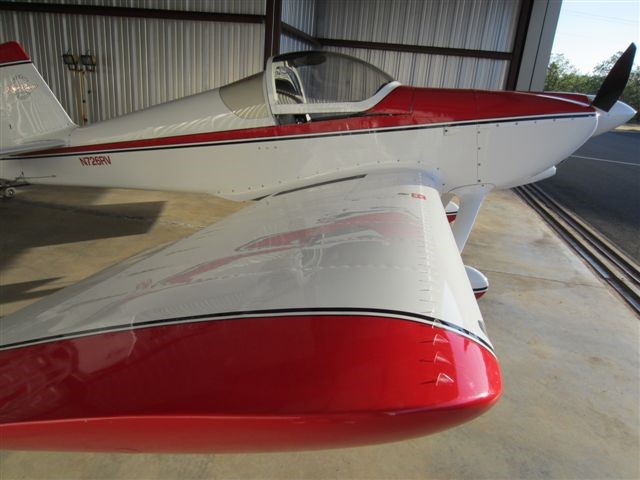
The RV-6 is an excellent performer for many types of flying, but like many experimentals, it is intolerant of mishandling. Experimental aircraft have more than double the accident rate of certified aircraft, largely due to differences in stall behavior and pilot technique. Certified aircraft are designed with benign stall behavior, but that often comes at the cost of performance. Experimental builders prioritize performance, resulting in tighter handling margins. Recent accidents, including a fatal RV-8 stall/spin and a mishandled LSA tailwheel accident, emphasize the need for better solutions.
The FAA and advocacy groups have long sought to reduce stall/spin accidents, with limited success. Angle of Attack (AOA) indicators are useful, but they cannot always prevent a low-altitude, cross-controlled stall. Brian’s approach was to improve the aircraft’s aerodynamic handling directly using Vortex Generators rather than adding more cockpit instrumentation.
“In critical situations where distraction, poor technique, or panic occur, vortex generators may provide the added stall margin and controllability that can save lives.”
He is convinced that widespread VG adoption in the RV fleet, combined with improved pilot discipline, can reduce stall/spin accidents.
RV-6 Test Report Aircraft Configuration
-
Model: Van’s RV-6
-
Engine: O-320
-
Propeller: Bernie Warnke performance prop
-
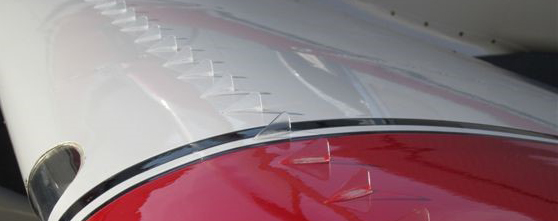
VG Placement: 90/60/30mm full-span installation on wings and horizontal stabilizer
-
Flight Time: 716 hours in type, over 240 hours with VGs
Brian considers this configuration a major alteration to the aircraft’s handling characteristics that requires new pilot techniques to fully benefit from it. The installation enhances overall controllability and stability across all speeds and loadings. Pitch and roll harmony improve significantly, especially during landings in challenging conditions.
However, these benefits can become liabilities if the aircraft is not flown correctly. Each pilot should conduct their own test flights to fine-tune VG placement and technique. The Stolspeed VG design, made from clear polycarbonate with 3M adhesive, allows easy reconfiguration during flight testing.
Independent Test Data
No formal stall-speed claims were made by Brian. However, reference tests by Paul Robertson (Aeronautical Testing Services Inc.) on a Harmon Rocket using similar VGs showed:
-
4G stall speed decreased by 10 mph
-
1G stall speed decreased by 5 mph
-
Takeoff roll shortened by 150 feet
-
Climb rate improved
-
Landing roll reduced
-
No significant effect on top speed
-
Stall AOA increased from 15° to over 20°
VG Installation Details (N726RV)
-
Wing root spacing: 90 mm
-
Aileron spacing: 60 mm (to wingtip)
-
Horizontal stabilizer spacing: 30 mm
-
Position: 7–9% chord from leading edge
This placement energizes the boundary layer early for maximum lift at high angles of attack.
Flight Performance Evaluation - Takeoff Performance
Takeoffs are performed without flaps, even in hot, high, or heavy conditions.
VGs generate lift earlier, noticeably reducing takeoff roll and vibration on rough fields.
“On my first rough-field takeoff with VGs, the plane had not rolled more than 100 feet before the shaking began to dissipate. I did not believe it, so I added a notch of flaps, and it slowed down.”
With VGs, the RV-6 lifts off sooner and more smoothly, even outperforming larger-engine or constant-speed prop aircraft during formation departures.
Stall Tests at Altitude
-
No-flap stalls: Remain abrupt, minimal buffet, good aileron authority.
-
Single-notch flaps: Steeper deck angle, slight buffet.
-
Full flaps: Pronounced stability; the aircraft resists stalling even at steep angles.
VGs make it harder to induce a stall, increasing safety margins, but Brian cautions against testing whip or power-on departure stalls unnecessarily.
Landing Tests
After extensive testing, Brian standardized his procedures:
-
Takeoff: Always without flaps
-
Landing: Always full flaps
Full flaps produce the shortest and most stable landings. VG-generated vortices enhance aileron authority and reduce yaw instability, making the aircraft easier to handle in gusty crosswinds.
“In gusty conditions, with full flaps and VGs, the aircraft settles smoothly and responds quickly to small control inputs. Without VGs, it used to yaw and roll unpredictably.”
VGs on the horizontal stabilizer improve elevator control during high-angle approaches, reducing the need for power corrections and shortening rollout distances.
Before/After Performance (MPH):
| Test | Before | After |
|---|---|---|
| Slow flight (clean) | 61 | 56 |
| Slow flight (full flaps) | 57 | 52 |
| Stall (clean) | 60 | 56 |
| Stall (full flaps) | 56 | 51 |
Takeoffs are smoother and faster, with improved climb (1000 fpm → 1200 fpm).
Top speed unchanged at 180 mph (O-320, 150 hp).
I cannot say if there is any measurable reduction in stall speed, but I do not care. What matters is the added control and the stubborn way the wing keeps lifting.With VGs, the RV-6 lands like it is on a cushion of air instead of wrestling a greased pig.
Full flap landings should be encouraged at all times, even in gusty and crosswind conditions. The enhanced aileron control helps compensate for wing lifting, and the added drag gets the plane on the ground and stopped sooner.When flying on a long cross country, low on fuel, with a destination airport experiencing strong crosswinds, VGs reduce pilot workload by stabilizing the plane and improving handling and stall characteristics.”
— Brian Parris, EAA #636323
No-Flap and Single-Notch Landings
No-flap or one-notch configurations are not recommended. With VGs, the RV-6 tends to float excessively, making touchdowns unpredictable and unsafe on short or windy runways. Full flaps balance lift and drag for the best control and shortest rollout.
The Stolspeed VG installation on the RV-6 improves:
-
Low-speed controllability
-
Crosswind and turbulence stability
-
Stall resistance
-
Overall flight safety
Brian believes that if the RV community widely adopts VGs, stall/spin accident rates could be significantly reduced.
“The RV-6 is a fine aircraft, but with proper pilot technique and Stolspeed VGs, it becomes even safer and more stable, especially in demanding conditions.”
Additional RV-6 Feedback
“The streamlining is important, even the base, because VGs are mounted in laminar flow. Stolspeed’s slim profile creates clean, tight vortices that cling to the surface without excess drag.
Longer, blade-type VGs or paired counter-rotating designs create interference and unnecessary drag. Tests showed a 5-knot drag penalty on a Cessna 206 with blade-type VGs compared to the Stolspeed profile.
The RV-6 also benefits from VGs under the horizontal stabilizer to improve elevator authority at slow speeds.”
JG (stolspeed designer)
“Much better roll control at slow speeds. The Super Cub will not stall like it used to. The airplane feels more stable and control inputs are cleaner.”
Steve Pankonin – Piper Pacer and Super Cub: